Introduction to the Series
The Turkish television series “Hay Sultan” (translated as “O Sultan”) is a monumental production that delves into the spiritual and historical life of one of Islam’s most revered figures, Hazrat Sheikh Abdul Qadir Jilani (R.A.). Known globally as the Ghaus-e-Azam (the Great Helper), his life remains a beacon of light for millions seeking spiritual purification and proximity to Allah.
Episode 3 of the Urdu dubbed version continues to weave a rich tapestry of 12th-century Baghdad, capturing the social, political, and spiritual climate of the time. This article provides an in-depth analysis of the events, themes, and spiritual lessons presented in this pivotal episode.
The Historical Context: Baghdad in the 12th Century
To understand the depth of Episode 3, one must first appreciate the setting. Baghdad, during the era of Abdul Qadir Jilani, was a city of contradictions. It was the intellectual heart of the Islamic world, home to the famous Nizamiyya Madrasa, yet it was also plagued by political instability, sectarian strife, and the looming threat of the Hashashin (Assassins).
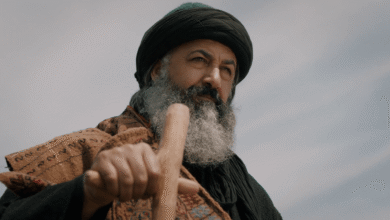
In this episode, we see Abdul Qadir Jilani—portrayed with profound serenity by actor Çetin Tekindor—navigating this complex landscape. He is not a man of worldly power, but a man of divine authority. His presence in Baghdad acts as a moral compass for a society that has lost its way in the pursuit of materialism and power.
Plot Summary of Episode 3
Episode 3 begins with the continuation of Abdul Qadir Jilani’s period of seclusion (Khalwa) and his gradual interaction with the people of Baghdad. Unlike other scholars who sought the patronage of the Sultan, the Sheikh remained steadfast in his asceticism (Zuhd).
1. The Confrontation with Inner Nafs
A significant portion of the episode focuses on the internal struggle. The narrative illustrates that the greatest “Sultan” is not the one who rules over lands, but the one who rules over his own desires. Through poignant dialogues, the viewers are shown how Abdul Qadir Jilani prioritizes the soul over the body. His diet is minimal, his sleep is scarce, and his remembrance (Dhikr) is constant.
2. The Plight of the Oppressed
In Episode 3, we see the Sheikh’s direct intervention in the lives of the common people. A recurring theme in this episode is justice. While the governors and soldiers exercise brute force, Abdul Qadir Jilani uses the “power of truth.” There is a specific scene where he defends a helpless individual against the tyranny of local officials, demonstrating that true spirituality is incomplete without social justice.
3. Meeting with Eşref (Ashraf)
The character of Eşref plays a vital role as a foil to the Sheikh. While Eşref represents the rugged, often violent reality of the era, his interactions with the Sheikh start to plant seeds of doubt in his own way of life. The episode highlights the transformative power of the Sheikh’s company (Sohbat). Even the most hardened hearts begin to soften in the presence of his divine light.
Spiritual Themes: The Core of the Episode
The Concept of “Hay” (The Living)
The title “Hay Sultan” itself is explored more deeply in this episode. “Al-Hayy” is one of the names of Allah, meaning “The Ever-Living.” The series suggests that those who truly connect with the Ever-Living God become “spiritually alive” themselves. Episode 3 showcases how Abdul Qadir Jilani’s life is a manifestation of this divine attribute—he is “alive” to the needs of the soul while the world around him is spiritually dead.
Asceticism vs. Worldliness
One of the most striking aspects of the Urdu dubbed version is how the translators have captured the essence of Sufi terminology. The episode contrasts the Dunya (the material world) with the Akhira (the hereafter). The Sheikh’s refusal to accept worldly titles or wealth, despite being offered them, serves as a powerful lesson for the modern viewer.
Character Analysis in Episode 3
- Hazrat Abdul Qadir Jilani: The centerpiece of the show. In this episode, his character emphasizes patience (Sabr). Even when faced with mockery or threats from those in power, his response is one of dignity and prayer.
- The Disciples: We see the beginning of a following. These are not just students learning books; they are seekers of the heart. Their devotion highlights the traditional Murid-Murshid (disciple-mentor) relationship.
- The Antagonists: The corrupt officials and the shadowy figures of the secret societies represent the “darkness” that the Sheikh’s “light” is destined to dispel.
Production Quality and Urdu Dubbing
The Urdu dubbing of “Hay Sultan” has been exceptionally well-received in Pakistan and India. The choice of voice actors reflects the gravity and wisdom of the characters. In Episode 3, the poetic dialogues regarding the nature of the heart and the love of the Prophet Muhammad (PBUH) are rendered with such emotional depth that they resonate deeply with the Urdu-speaking audience, who have a long-standing cultural connection to Sufism.
The cinematography remains breathtaking. The dusty streets of Baghdad, the dimly lit chambers of the Sheikh, and the vast, silent deserts create an atmosphere of mysticism that complements the narrative.
Why “Hay Sultan” Episode 3 is a Must-Watch
This episode is not just entertainment; it is a spiritual workshop. It addresses several modern-day anxieties:
- Finding Peace: In a world of noise, the Sheikh’s silence is a lesson in finding inner peace.
- Integrity: The episode teaches that standing by one’s principles is more important than seeking approval.
- Compassion: It reminds us that the height of spirituality is found in serving humanity.
Key Takeaways and Lessons
As the episode draws to a close, the viewer is left with several profound thoughts:
- The Power of Prayer: The Sheikh’s primary weapon is his Dua.
- Humility: Despite his immense knowledge and spiritual station, his humility is his most defining trait.
- Faith in Allah: The episode reinforces the idea that if one belongs to Allah, Allah takes care of all their affairs.
Conclusion
“Hay Sultan” Episode 3 is a masterpiece of historical storytelling. It successfully bridges the gap between a historical biopic and a spiritual guide. For the Urdu-speaking viewers, this series is a rare gem that honors the legacy of Hazrat Abdul Qadir Jilani (R.A.) with the respect and artistry he deserves.
Whether you are a student of history, a seeker of spiritual truth, or simply a fan of high-quality Turkish dramas, this episode offers something for everyone. It invites us to look beyond the surface of life and discover the “Sultan” within our own hearts.
Watch Hay Sultan Episode 3 Urdu Dubbed on Official Platforms:
To experience this journey yourself, you can watch the episode on platforms like tabii Urdu or official YouTube channels that hold the broadcasting rights. Ensure you support the creators by watching on authorized channels.