
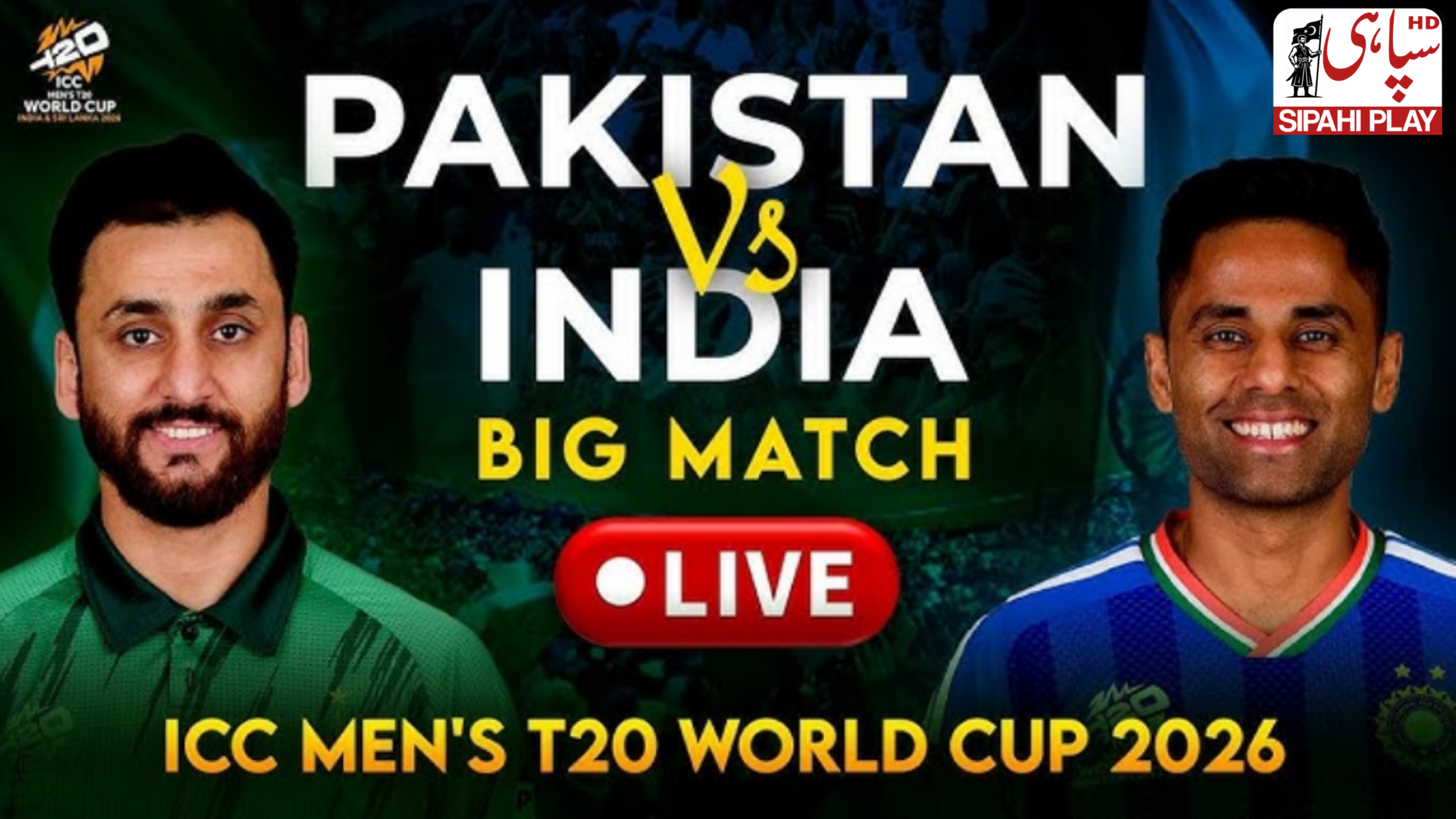
In the world of international sports, few rivalries can claim to stop a significant portion of the global population in its tracks. While the Ashes carries the weight of tradition and the “El Clásico” in football vibrates with club-level passion, nothing quite matches the atmospheric pressure, political undertones, and sheer emotional scale of an India versus Pakistan cricket match. When these two titans meet in the ICC Men’s T20 World Cup, it isn’t just a game; it is a cultural event, a diplomatic high-wire act, and a trial of nerves for over a billion people.
1. The Historical and Cultural Weight
The rivalry between India and Pakistan is rooted in the shared and painful history of the 1947 Partition. For both nations, cricket became a medium of national expression—a way to assert identity and superiority without the direct conflict of war. Over the decades, the cricket field has often mirrored the fluctuating diplomatic ties between the two South Asian neighbors.
Since bilateral series have become a rarity due to political tensions, the ICC tournaments—specifically the T20 World Cup—have become the only stage where these two giants clash. This scarcity has exponentially increased the value of every encounter. Every delivery is scrutinized, every dropped catch is mourned like a national tragedy, and every victory is celebrated as a moment of historic triumph.
2. Evolution of the T20 World Cup Rivalry
The story of India vs. Pakistan in the T20 format is relatively young compared to their Test history, but it is perhaps the most dramatic. It all began in 2007, during the inaugural T20 World Cup in South Africa.
The 2007 “Bowl-Out” and the Final
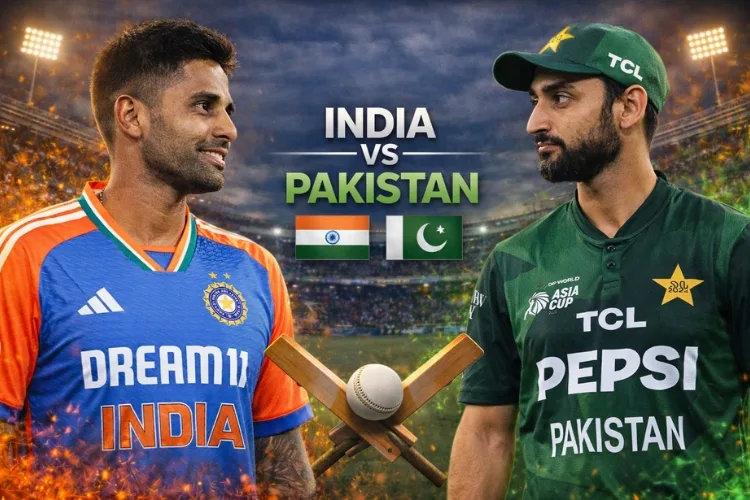
The first-ever T20 World Cup meeting in Durban ended in a tie, leading to a legendary “bowl-out”—cricket’s version of a penalty shootout. India’s clinical 3-0 victory in that bowl-out set the tone for the rivalry. Fast forward a few weeks to the final in Johannesburg: a match that changed cricket forever. Misbah-ul-Haq’s fateful scoop shot, caught by Sreesanth, handed India the trophy and birthed the Indian Premier League (IPL) era, while leaving Pakistan with a heartache that took years to heal.
The Decade of Indian Dominance
From 2007 to 2016, India maintained a psychological stranglehold over Pakistan in World Cups. Whether it was the clinical chase led by Virat Kohli in Colombo (2012) or the rain-curtailed thriller in Kolkata (2016), India seemed to possess a “big game” temperament that Pakistan lacked. During this period, the rivalry often felt lopsided, with India winning seven out of eight encounters across the first few editions.
The 2021 Rupture: Pakistan Breaks the Jinx
The narrative shifted dramatically in Dubai 2021. After 29 years of losing to India in World Cup events (both ODI and T20), Pakistan produced a perfect game. Shaheen Shah Afridi’s opening spell—dismissing Rohit Sharma and KL Rahul—remains one of the most iconic moments in cricket history. Babar Azam and Mohammad Rizwan chased down the target of 152 without losing a single wicket, marking a historic 10-wicket victory that proved Pakistan was no longer the “underdog” in the psychological battle.
3. Iconic Moments and Modern Classics
If 2021 was about dominance, Melbourne 2022 was about magic. Over 90,000 fans packed the MCG to witness what many call the greatest T20 match ever played. Reduced to 31/4 while chasing 160, India looked down and out. Then came the “Shot of the Century”—Virat Kohli’s back-foot straight six off Haris Rauf. That single moment flipped the momentum, leading to a last-ball victory that solidified Kohli’s status as a modern-day deity in Indian cricket.
Even in New York 2024, on a difficult and slow pitch, the rivalry produced a low-scoring “knife-fight.” India defended a meager 119, with Jasprit Bumrah proving why he is the best in the business. These matches highlight a fundamental truth: no matter how low the score or how certain the result seems, an India-Pakistan game is never over until the final ball.
4. The 2026 T20 World Cup: A New Chapter in Colombo
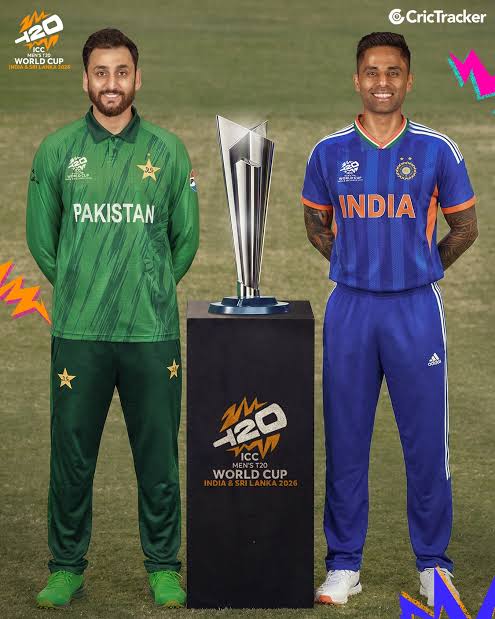
As we find ourselves in February 2026, the rivalry returns to the R. Premadasa Stadium in Colombo. The context this year is even more fascinating. India enters as the defending champion, boasting a squad led by the fearless Suryakumar Yadav, whose 360-degree batting has redefined T20 optics. Meanwhile, Pakistan has undergone a strategic evolution under the leadership of Salman Agha, blending their traditional pace battery with a newfound “spin quintet” featuring the mysterious Usman Tariq.
Key Player Battles to Watch
The 2026 clash is built on tantalizing individual matchups:
- Jasprit Bumrah vs. Sahibzada Farhan: Farhan has emerged as Pakistan’s most aggressive top-order weapon, but facing Bumrah’s pinpoint yorkers and deceptive slower balls is the ultimate test.
- Suryakumar Yadav vs. Shaheen Afridi: The world’s best T20 batter against the world’s most dangerous left-arm pacer. Shaheen’s ability to swing the ball back into the right-hander remains the biggest threat to India’s power-packed middle order.
- The Spin Factor: On a used Colombo surface, India’s Kuldeep Yadav and Varun Chakravarthy will battle Pakistan’s Shadab Khan and Abrar Ahmed. In T20 cricket, the middle overs often decide the fate of the game, and this battle of the wrist-spinners will be decisive.
5. The Economic and Global Impact
Beyond the boundaries, the India-Pakistan match is the financial engine of global cricket. It is estimated that a single group-stage encounter between these two generates over $180 million in revenue—nearly 20% of the ICC’s total revenue for a World Cup cycle. Broadcasters pay a premium for these rights because they know the viewership will rival the FIFA World Cup final, with estimates often crossing 400 million live viewers.
This commercial reality is why the ICC consistently places both teams in the same group. While critics argue this “forced” scheduling dilutes the organic nature of the rivalry, fans clearly disagree; tickets for the 2026 clash in Colombo sold out within minutes of being released, with resale prices reaching astronomical heights.
6. More Than Just a Game: The Psychology of Pressure
What makes this rivalry unique is the psychological toll it takes on the players. To lose an India-Pakistan match is to face a wave of national mourning; to win is to become an instant immortal. In both nations, players are often told, “Lose to anyone else, but don’t lose to them.”
This pressure often leads to “choking” or moments of individual brilliance born out of desperation. It is a game played as much in the mind as it is with the bat and ball. The team that wins is usually the one that manages to block out the noise of 40,000 screaming fans and the expectations of millions back home.
7. Conclusion: The Eternal Flame
As the sun sets over the R. Premadasa Stadium today, February 15, 2026, the world will once again witness a spectacle that defies logic and transcends boundaries. The India-Pakistan rivalry is a reminder of cricket’s power to unite and divide, to create heroes and villains, and to provide a narrative more compelling than any Hollywood script.
Whether it is a high-scoring thriller or a low-scoring scrap, the essence remains the same. It is about pride, it is about history, and above all, it is about that one moment of magic that will be talked about for generations to cough. In the end, cricket is the winner, but for the fans in Delhi and Lahore, Mumbai and Karachi, the only thing that matters is whose flag flies higher when the bails are lifted
Pakistan Vs India Match Live Watch Now
نوٹ: میچ دیکھنے کیلئے پلیئر میں موجود انڈیا بمقابلہ پاکستان کے پوسٹر پر کلک کریں۔