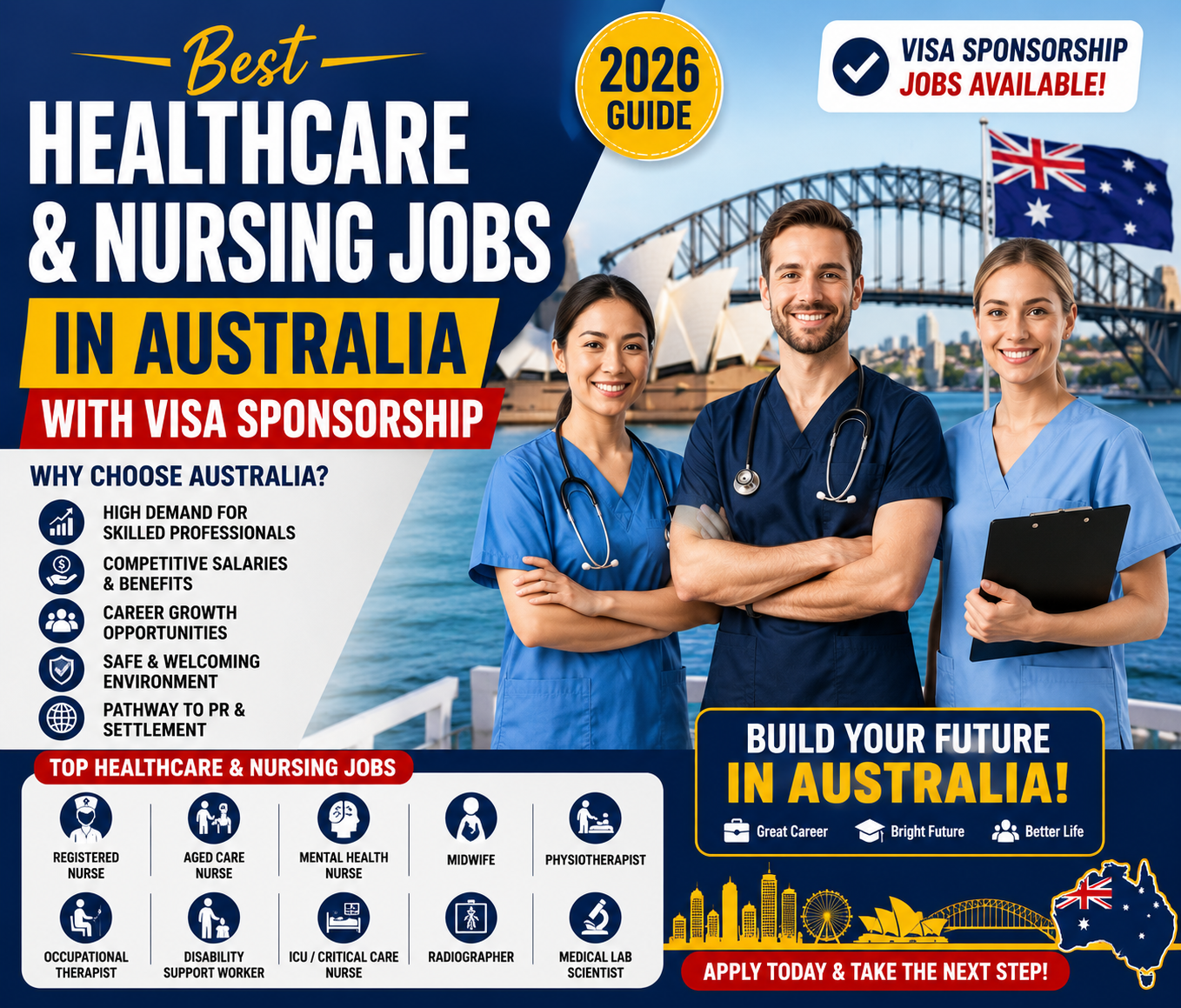
Best Healthcare and Nursing Jobs in Australia with Visa Sponsorship (2026)
Australia has long been recognized for its high-quality healthcare system and excellent working conditions for medical professionals. As the country’s population continues to grow and healthcare services expand, hospitals, aged care providers, rehabilitation centers, and community clinics regularly look for qualified professionals to join their workforce.
For international applicants, 2026 may offer a variety of opportunities across nursing and healthcare roles. While hiring needs and immigration rules can change over time, many Australian employers recruit skilled professionals from overseas when they cannot fill positions locally.
This guide explains some of the most in-demand healthcare and nursing careers in Australia, the qualifications employers commonly look for, and practical tips for international applicants.
Why Choose Australia for a Healthcare Career?
Australia consistently ranks among the top countries for healthcare quality and professional standards. Healthcare workers often benefit from modern medical facilities, structured career development, and a supportive work environment.
Some reasons professionals choose Australia include:
- Competitive salaries
- Modern hospitals and healthcare technology
- Strong workplace protections
- Opportunities for career progression
- High standard of living
- Multicultural communities
Healthcare remains one of Australia’s largest employment sectors, creating ongoing opportunities across many specialties.
1. Registered Nurse (RN)
Registered Nurses remain one of the most sought-after healthcare professionals across Australia.
Main Responsibilities
- Assessing patients
- Administering medications
- Monitoring recovery
- Coordinating patient care
- Educating patients and families
Typical Salary
Approximately AUD $75,000–$120,000 per year, depending on experience, employer, location, and shift arrangements.
2. Aged Care Nurse
Australia’s growing elderly population continues to increase demand for professionals working in aged care.
Typical duties include:
- Supporting older adults
- Managing long-term health conditions
- Medication assistance
- Personal care planning
- Family communication
Experienced aged care nurses are valued in both residential and community settings.
3. Emergency Department Nurse
Emergency departments require professionals who can work confidently under pressure.
Responsibilities include:
- Patient triage
- Emergency treatment support
- Clinical documentation
- Working with multidisciplinary teams
Emergency nursing often provides excellent professional development opportunities.
4. Intensive Care Unit (ICU) Nurse
ICU nurses care for critically ill patients requiring continuous monitoring.
Responsibilities may include:
- Operating advanced monitoring equipment
- Supporting intensive treatments
- Patient assessment
- Collaboration with specialist doctors
ICU experience is highly regarded within Australian healthcare.
5. Mental Health Nurse
Mental health services continue to expand throughout Australia.
Typical responsibilities:
- Patient assessments
- Treatment support
- Crisis intervention
- Recovery planning
- Community mental health services
Mental health professionals play an important role in improving patient wellbeing.
6. Midwife
Midwives provide care throughout pregnancy, childbirth, and postnatal recovery.
Their work includes:
- Prenatal monitoring
- Birth support
- Newborn care
- Family education
Midwifery remains an important profession within Australia’s healthcare system.
7. Disability Support Worker
Disability support professionals assist individuals in maintaining independence and participating in daily life.
Common duties include:
- Personal support
- Community participation
- Daily living assistance
- Health monitoring
Demand continues to grow as disability services expand.
8. Physiotherapist
Physiotherapists help patients recover from injuries and improve mobility.
Responsibilities include:
- Physical assessments
- Rehabilitation planning
- Exercise therapy
- Pain management
Physiotherapists work in hospitals, rehabilitation centers, private clinics, and sports facilities.
9. Occupational Therapist
Occupational therapists help patients regain everyday functional skills.
Typical responsibilities:
- Rehabilitation programs
- Home assessments
- Assistive equipment recommendations
- Therapy planning
Professionals work with children, adults, and elderly patients across multiple healthcare settings.
10. Medical Laboratory Scientist
Laboratory professionals assist doctors by conducting medical tests that support diagnosis and treatment.
Responsibilities include:
- Blood testing
- Sample analysis
- Quality control
- Laboratory reporting
This role is essential within modern healthcare systems.
Skills Employers Value
Australian healthcare employers generally look for professionals who demonstrate both technical expertise and strong interpersonal skills.
Important skills include:
- Excellent communication
- Clinical knowledge
- Teamwork
- Time management
- Compassionate patient care
- Professional ethics
- Problem-solving ability
- Attention to detail
Strong communication with patients and colleagues is especially important.
Qualifications International Applicants May Need
Requirements differ depending on the profession and employer.
Applicants may need:
- Recognized healthcare qualifications
- Professional registration where applicable
- Relevant work experience
- English language proficiency
- Updated resume
- Professional references
Some occupations require registration with Australian professional authorities before employment.
How to Apply for Healthcare Jobs
Prepare a Professional Resume
Your resume should clearly present:
- Education
- Clinical experience
- Certifications
- Professional achievements
- Technical skills
Keep formatting clean and easy to read.
Gather Supporting Documents
Employers may request:
- Academic certificates
- Professional licenses
- Employment references
- Passport
- Language test results
Always ensure documents are accurate and up to date.
Search for Suitable Opportunities
Many hospitals, aged care providers, healthcare networks, and community organizations advertise vacancies through their official career websites and recognized recruitment platforms.
Read each job description carefully before applying.
Prepare for Interviews
Interview questions may focus on:
- Clinical decision-making
- Patient safety
- Teamwork
- Communication
- Professional ethics
Preparing examples from previous experience can improve interview performance.
Salary Expectations
Healthcare salaries vary depending on experience, location, employer, qualifications, and shift patterns.
Approximate annual salary ranges include:
- Registered Nurse: AUD $75,000–$120,000
- ICU Nurse: AUD $90,000–$140,000
- Mental Health Nurse: AUD $80,000–$130,000
- Physiotherapist: AUD $80,000–$130,000
- Occupational Therapist: AUD $80,000–$120,000
- Disability Support Worker: AUD $55,000–$85,000
Actual earnings may differ based on individual circumstances.
Career Development
Healthcare professionals can continue advancing through:
- Specialist certifications
- Leadership roles
- Clinical education
- Research opportunities
- Healthcare management
Continuous learning is highly encouraged throughout Australia’s healthcare sector.
Tips for International Applicants
To improve your chances of success:
- Keep your resume updated.
- Gain relevant clinical experience whenever possible.
- Develop strong English communication skills.
- Carefully review employer requirements before applying.
- Submit complete and accurate applications.
- Prepare thoroughly for interviews.
A professional and well-prepared application can help you stand out.
Final Thoughts
Healthcare and nursing continue to be among Australia’s most important employment sectors in 2026. Hospitals, aged care providers, rehabilitation centers, and community healthcare organizations regularly seek qualified professionals to deliver high-quality patient care.
International applicants who meet professional requirements, maintain up-to-date qualifications, and submit strong applications may find rewarding career opportunities across Australia. Before applying, always check the employer’s official job requirements and current Australian immigration and professional registration policies.
With proper preparation, ongoing professional development, and a commitment to quality patient care, healthcare careers in Australia can provide long-term professional growth and valuable international experience.